

New
Non Cooperation In India : Nonviolent Strategy And Protest, 1920–22
Non Cooperation In India : Nonviolent Strategy And Protest, 1920–22
by David Hardiman
Age (years) : 18 - 99
Couldn't load pickup availability
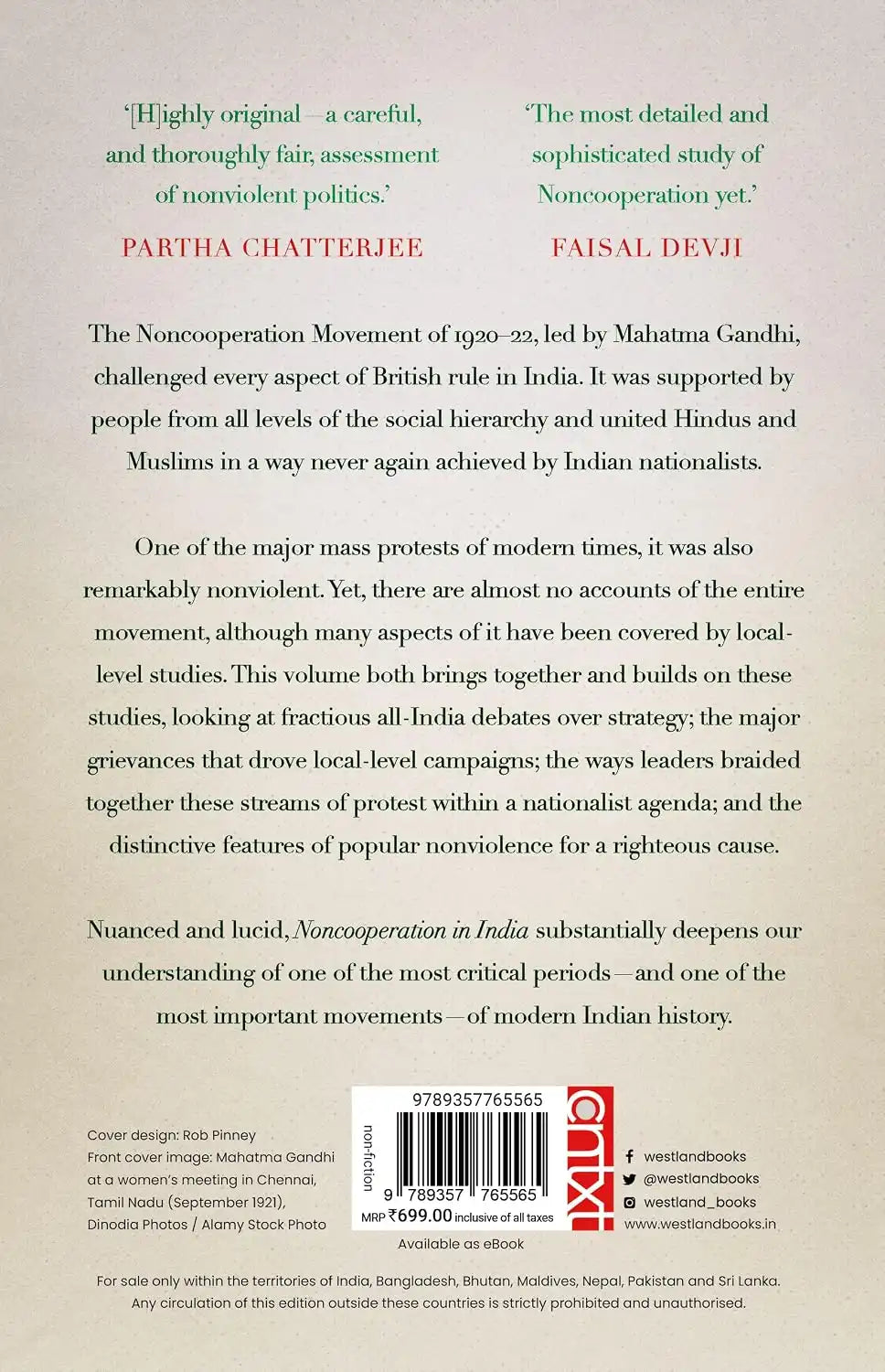
Non Cooperation in India: Nonviolent Strategy and Protest, 1920–22 by David Hardiman examines one of the defining phases of India's struggle for independence. Focusing on the Noncooperation Movement led by Mahatma Gandhi between 1920 and 1922, the book explores how a nationwide campaign of nonviolent resistance challenged British rule and mobilised people across social and religious communities. It offers readers a detailed historical account of the movement's origins, development and lasting significance.
Building on extensive historical research, David Hardiman analyses the strategies, debates and local campaigns that shaped the movement while explaining how diverse forms of protest were brought together under a shared nationalist vision. The book also considers why the campaign, despite falling short of immediate self-rule, became a turning point in weakening British authority in India.
About This Book
This study traces the Noncooperation Movement from its launch in 1920 to its conclusion following Gandhi's arrest in 1922. Rather than focusing on isolated events, it presents a broad account of the movement by bringing together findings from numerous local studies to provide a comprehensive understanding of this period in India's freedom struggle.
The book explores the debates surrounding nonviolent strategy, the grievances that fuelled regional protests and the leadership that connected these movements into a national campaign. It also examines the distinctive character of popular nonviolence and the role it played in shaping the Indian nationalist movement during a crucial historical moment.
What You'll Discover
- The origins and development of the Noncooperation Movement, 1920–22.
- Mahatma Gandhi's leadership and nonviolent strategy.
- National and regional debates over protest methods and political action.
- The grievances that inspired local campaigns across India.
- How diverse protests were united within a nationalist movement.
- The impact of the campaign on British rule despite the absence of immediate self-rule.
- Insights into the practice of organised nonviolent resistance.
Perfect For
- Readers interested in Indian history.
- Students and researchers of the Indian freedom movement.
- Those studying Mahatma Gandhi and nonviolent resistance.
- Readers of political and social history.
Why You'll Love This Book
Non Cooperation in India: Nonviolent Strategy and Protest, 1920–22 provides a carefully researched examination of a landmark movement in modern Indian history. David Hardiman combines historical analysis with insights from local studies to present a deeper understanding of the strategies, challenges and enduring legacy of the first nationwide Noncooperation Movement.
- Details
Publisher : Context
Format : Paperback
Language : English
Content : Non-Fiction
Style : Non-Illustrated
ISBN : 9789357765565
Size : Medium
SKU : BY36-201
Genre : Politics
Share